Welcome to Winter Break Mini-Camp at Camp Khan Kids! Each day, little learners explore cozy winter themes through playful activities that build reading, writing, math, science, and SEL skills.
Download Khan Academy Kids (free) and look for the books and activities listed below in the Library (purple book icon). [Click here to download Khan Academy Kids]
Feel free to mix and match activities to fit your family’s needs.
See the schedule below for this week’s activities and scroll through this article to find details and links.
- Day 1—Cozy Togetherness
- Day 2—Winter Animal Wonders
- Day 3—Snowy Science
- Day 4—New Year of Joy
- Day 5—Ice Explorers
Having fun during your Camp Khan Kids Winter Break Mini-Camp? Share your photos and stories with us on social media. Follow us on Facebook, Instagram, TikTok, or X, and include #campkhankids on your posts.
Day 1—Cozy Togetherness
🎥 Watch: Sidewalk Chalk Circle Time
Kick off camp with a creativity boost! Join Caroline and Sophie for chalk-inspired fun.
📖 Read: Something Warm
You'll find this book in the Khan Academy Kids app! Follow this path to find the book: Library → Books → Scroll down to the Stories with People section.
Questions for discussion:
- Do you have a favorite thing to wear?
- How did sharing his jacket with Emma make Jamal feel? How do you think Emma felt?
- Look around your home. Is there anything you no longer use that someone else might need?
✏️ Write: Your Favorite Wintery Memory
Have your child draw and label a cozy winter memory (e.g., hot cocoa, building a snowman). Encourage a sentence or two using “first/then/last.”
Download our free writing pages here.
🤔 Learn: Snowflake Mindfulness
- Discuss: Mindfulness
Mindfulness means paying kind attention to what’s happening right now—your breathing, your body, and the world around you. You can practice by taking slow “smell the flower, blow the candle” breaths and noticing one thing you can see, hear, and feel. Mindfulness helps your brain feel calm and focused, like a snow globe after the glitter settles. - Vocabulary: mindfulness, breathing, focused
- Explore:
- Snowflake Breathing—Guide a simple snow-breath: pretend to inhale a snowflake (slow 3-count), then exhale to watch it drift down (slow 3-count). Repeat 5 times.
- Explore a kid-friendly winter mindfulness idea like Snowball Breaths.
🧸 Play: Build a Blanket Fort
What you’ll need: sheets/blankets, chairs/sofa, pillows, clips/clothespins, a flashlight.
Steps:
- Pick a soft floor area;
- Drape blankets over chairs/sofa;
- Clip corners—clothespins, chip clips or binder clips work great for this step;
- Add pillows + a reading light;
- Read a book in your new cozy fort!
Day 2—Winter Animal Wonders
🎥 Watch: Story Time—Penguin or Puffin?
Compare two black-and-white, cold-weather birds—learn what makes each unique.
📖 Read: Polar Bears
You'll find this book in the Khan Academy Kids app! Follow this path to find the book: Library → Books → Scroll down to the Animal Safari section.
Questions for discussion:
- What is something new you learned about polar bears?
- What color are polar bears? Why do you think that is?
- What kinds of things do polar bears like to eat?
✏️ Write: Cold Habitat Animals
Invite kids to list or draw animals that live in polar/tundra places (e.g., polar bear, arctic fox, puffin, walrus). Add labels or beginning-sound letters.
Download our free writing pages here.
For more inspiration, read Tundra, available in the Khan Kids app!
🤔 Learn: Hibernation & Habitats
-
Discuss: What is Hibernation?
Hibernation is when some animals take a very long, deep rest during winter. Their bodies slow way down—breathing and heartbeats get slower—so they don’t need much food when it’s cold and hard to find.An animal’s habitat (the place it lives) helps decide if it hibernates. In habitats where winter is very cold or food is hard to find, animals curl up in safe spots in that habitat—like a den, burrow, or under mud—until it warms up again.
Examples: bats, groundhogs, chipmunks, and some frogs and turtles; some bears take a long winter sleep, too.
- Vocabulary: habitat, hibernate.
- Explore:
- Sort it! Name animals that hibernate (bear, bat) vs. ones that don’t (fox, moose).
- Quick draw: Sketch a cozy den vs. snowy tundra.
Explore more kid-friendly resources on hibernation:
- Nat Geo Kids: Fascinating Ways Animals Prepare for Winter
- Britannica Kids: Hibernation
-
Highlights: 20 Hibernation-Themed Activities and Crafts for Preschoolers
🧸 Play: Polar Bear Pancakes
What you’ll need:
- Your favorite pancake mix (e.g. Bisquick) and ingredients needed
- Whipped cream, cream cheese, or yogurt for the glue
- Banana for the nose
- Blueberries or chocolate chips for the eyes
- Powdered sugar and/or shredded coconut for the fur
Steps:
- Whip up your favorite pancake recipe. You'll need three circular pancakes per polar bear: 1 big for the head, and 2 small for the snout and ears.
- Once done cooking, cut one of your small pancakes in half. These will be your ears.
- Now it's time to assemble and decorate! Get creative—there is no right or wrong way to make your polar bear. To make the bear you see above, we sprinkled our bear with powdered sugar, added some whipped cream and coconut to his ears, used blueberries for his eyes, and a banana slice with a bit of chocolate syrup for his nose.
Find inspiration on other animals to make from Food Network.
Day 3—Snowy Science
🎥 Watch: Snow Day Circle Time
Read and sing along as we celebrate snowy weather.
📖 Read: Winter
You'll find this book in the Khan Academy Kids app! Open Library → Books → Scroll down to the Science section.
Questions for discussion:
- Is winter always cold? Why not?
- What does winter look like where you live? Is it hot or cold?
- What happens to plants during the winter?
✏️ Write: What makes each snowflake unique?
Did you know that no two snowflakes are exactly the same? Kind of like people!
Draw a snowflake and label parts (center, branches, tips). Add one sentence about how “no two are alike.”
Download our free writing pages here.
Explore more about snowflakes from SkySci for Kids.
🤔 Learn: Symmetry
- Discuss: What is Symmetry?
Symmetry is when two sides of something match like a mirror—if you fold it down the middle, the halves line up. Snowflakes have symmetry because they grow with six points around a center, and each point repeats the same shapes. That means every “arm” looks like the others, so the snowflake looks balanced all the way around. - Vocabulary: symmetry.
- Explore:
- Fold paper in half → draw half a heart/snowflake → cut → unfold to reveal line of symmetry.
- Hunt symmetry at home (butterfly wings, faces, letters like A/H/M).
- Play Symmetry Painter from PBS Kids.
🧸 Play: Make salt crystal snowflakes
What you’ll need:
- Borax (found with laundry detergent)
- Water
- Jars or Vases (glass is preferred)
- Craft sticks or pencils
- String or Ribbon
- Pipe cleaners
Twist pipe cleaners into a snowflake, tie to a pencil, suspend in a saturated salt or borax solution, and leave overnight to crystallize.
Check out Little Bins, Little Hands for step-by-step instructions.
Day 4—New Year of Joy
🎥 Watch: Healthy Habits Circle Time
Celebrate small routines that help our bodies and brains feel great. What new habits do you hope to start this year?
📖 Read: Abuela Chela Quits!
You'll find this book in the Khan Academy Kids app! Open Library → Books → Scroll down to the Reading Adventures section.
Questions for discussion:
- What does Abuela Chela make for her family every Christmas? What does your family like to eat on special holidays?
- Family holidays are fun, but a lot of work! How can you be a helper in your family?
- What happened when all of the cousins worked together?
✏️ Write: Learning New Things
At the start of a new year, many people like to think ahead, set goals, and plan for the days to come.
There are 365 days in this new year—what do you want to learn? Prompt kids to draw and write one thing they'd like to learn this year. For example, I want to learn how to ride a bike.
Offer sentence starters: “I will…”, “I can practice by…”.
Download our free writing pages here.
🤔 Learn: Goal Setting
- Discuss: What is a Goal?
Goals are little plans for something you want to learn or do—like zipping your coat or riding a bike. To set a goal, pick one small thing, think of a few steps to try, and practice a little each day. Celebrate your effort and progress—every small step counts! - Vocabulary: goal
- Explore:
- Draft your own goals for the new year. Download our free goal setting template here.
- Pair this exercise with a quick mindfulness moment (see Day 1).
🧸 Play: Make your own party hats!
What you’ll need:
- Printable Party hat templates
- Construction paper or thin card stock that will go through your printer
- Items to decorate: stickers, pom poms, markers, glitter—what ever feels festive to you!
- Thin elastic
- Stapler
- Scissors
- Hole punch.
Visit The Craft Train for step-by-step instructions!
Day 5—Ice Explorers
🎥 Watch: Glide On Ice Circle Time
Explore icy movement and winter fun with the Khan Kids crew.
📖 Read: National Geographic Explorer—Extreme Ice
You'll find this book in the Khan Academy Kids app! Open Library → Books → Scroll down to the 2nd Grade National Geographic Explorer section.
Questions for discussion:
- What is a glacier?
- Can you remember which is the only continent without glaciers?
- How do you think Michele Koppes feels while climbing a glacier? How do you think you would feel?
✏️ Write: Under the ice
Did you know that some animals and plants can survive below the ice?
Draw a cross-section (ice on top, water below) and label what you think you'd find above the ice and below the ice: fish, bubbles, rocks, plants, maybe a seal!
Add a sentence: “Under the ice I see…”.
Download our free writing pages here.
🤔 Learn: What makes ice melt fastest?
-
Discuss: What makes ice melt?
Melt means something hard or solid turns into a liquid because it gets warmer. For example, an ice cube melts into a little puddle of water in your hand, and a snowman melts on a sunny day.Ice melts when it warms up. Heat from the sun, warm air, or warm hands gives the ice enough energy to change from a solid into liquid water. Salt can make ice melt faster by making it harder for the ice to stay frozen, so it can melt even when it still feels cold outside.
- Vocabulary: ice, salt, melt
-
ScienceNews Explores Experiment: What makes ice melt fastest?
- Set out an equal number of ice cubes in a few bowls. Sprinkle each with a different material (salt, sugar, sand; one plain control).
- Predict → observe → compare.
- Talk about freezing-point depression and why road salt works.
🧸 Play: Create ice sculptures
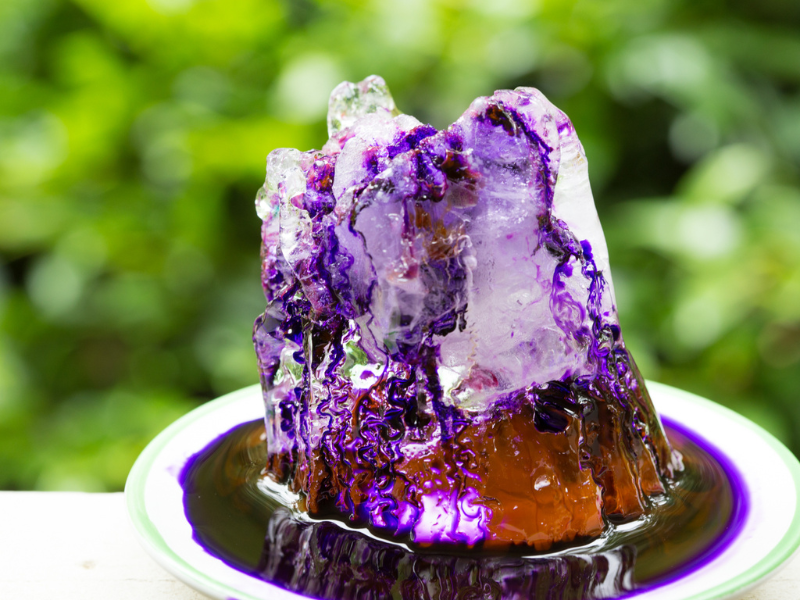
Freeze a block of ice, sprinkle salt to make crevasses, drip diluted food coloring or watercolors, then observe colorful “rivers.”
See the full tutorial from Artful Parent.
Thank you for learning with us!
Don't forget to share your photos and stories with us on social media. Follow us on Facebook, Instagram, TikTok, or X, and include #campkhankids on your posts.
Comments
0 comments
Please sign in to leave a comment.